Direct Factory for Custom Channel Letters | Global Shipping Services
What Are Electroplating and Wet Plating?
Although the two terms are sometimes used interchangeably, in industrial manufacturing they generally refer to traditional wet chemical plating processes.
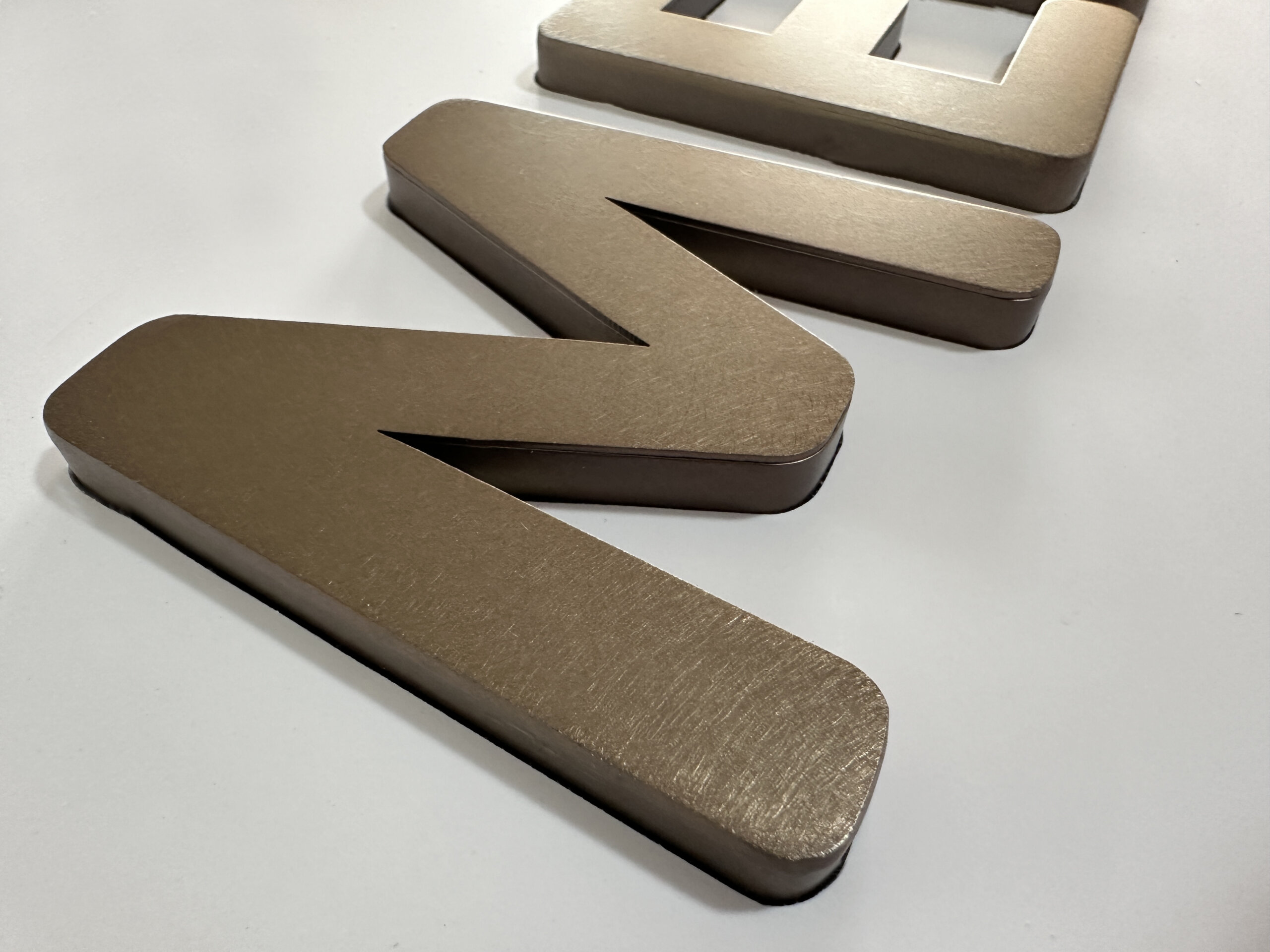
Random water plating pattern
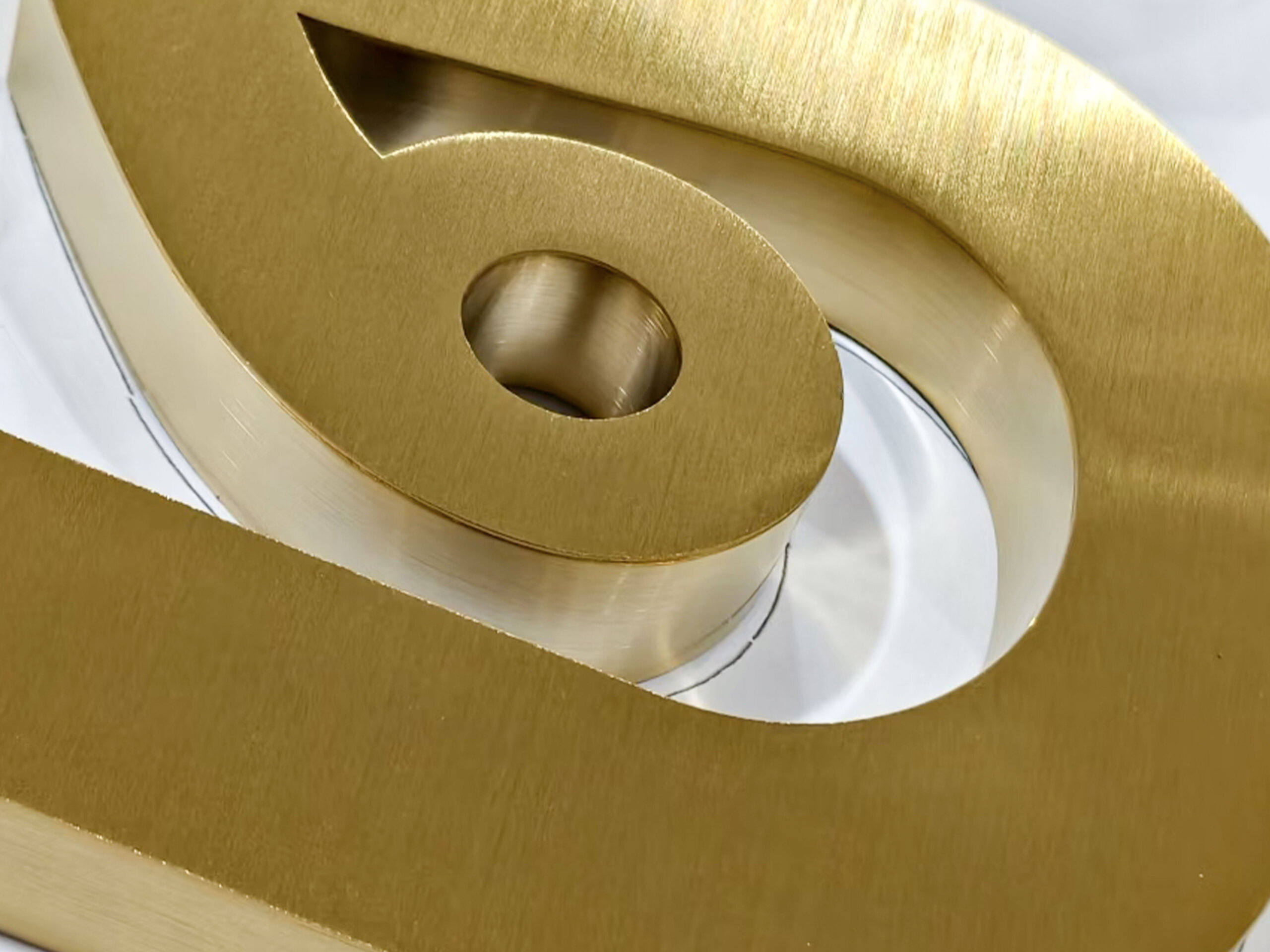
Brushed plating
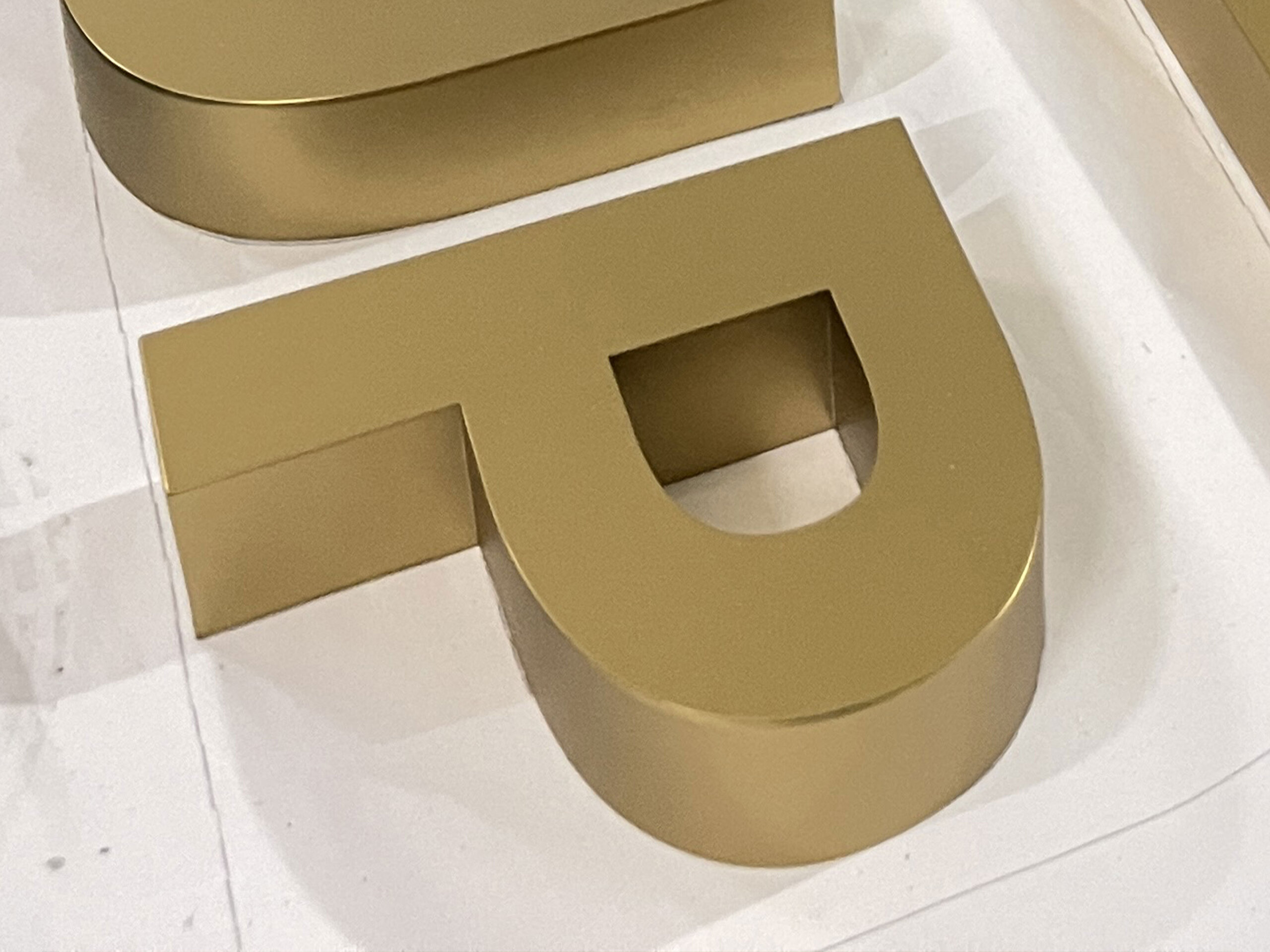
PVD Sand Gold
Wet Plating (Conventional Chemical Plating)
This process involves immersing parts in a chemical solution containing metal ions. Through chemical reactions or applied electric current, a metal layer is deposited onto the surface of the workpiece.
Advantages
Cost-effective: Suitable for large-scale, low-budget productio.
Full coverage: Liquid solutions can flow into complex geometries and cavities, enabling 360-degree coating covera
Disadvantages
Environmental concerns: Generates large amounts of wastewater containing heavy metals and cyanides, facing strict global environmental regulations.
Thin coating layer: The wear resistance and hardness are generally lower than PVD coatings.
What Is PVD Coating?
PVD (Physical Vapor Deposition) is an advanced surface coating technology.
In a high-vacuum environment, materials are vaporized through physical processes (such as arc evaporation or magnetron sputtering) and then deposited onto the workpiece surface as a thin film.
Advantages
Superior hardness and wear resistance: PVD coatings are typically harder than electroplated layers and more scratch-resistant.
Environmentally friendly: The process occurs inside a vacuum chamber and produces no hazardous wastewater or emissions, meeting international standards such as RoHS and REACH.
Excellent color options: Capable of producing stable finishes such as titanium gold, rose gold, champagne gold, black titanium, and rainbow coatings.
Ultra-thin and uniform: Coating thickness usually ranges from 0.1 μm to 1 μm, preserving precision dimensions and surface textures (e.g., brushed finishes).
Disadvantages
High equipment cost: Vacuum chambers and equipment require significant investment.
Limited coverage on deep structures: As a line-of-sight deposition process, PVD may have difficulty coating deep holes or highly complex internal geometries, compared with wet plating.
Core Parameter Comparison Table
| Characteristics | Water Plating | Electroplating | PVD Coating |
| Coating Composition | Nickel, Chromium, Zinc, Gold, etc. | Nickel, Chromium, Zinc, Gold, etc. | Titanium Nitride, Titanium Carbide, Oxides, etc. |
| Hardness | Average | Relatively High | Extremely High ($Hv > 2000$) |
| Corrosion Resistance | Medium | Excellent (Depends on coating thickness) | Superior (Strong chemical stability) |
| Environmental Level | Low (Serious pollution) | Medium-Low | Extremely High (Green & pollution-free) |
| Color Stability | Average | Relatively Good | Excellent (Not easy to fade) |
| Processing Cost | Extremely Low | Relatively Low | Relatively High |
How to Choose for Your Project?
When to Choose PVD Coating:
- Premium brand image:
Such as stainless steel signage for five-star hotels, high-end medical wayfinding systems, or luxury display racks. - Long-term outdoor use:
Situations requiring resistance to UV exposure, rain corrosion, and color fading. - Environmental compliance requirements:
If your products are exported to regions such as Europe or North America with strict environmental regulations.
When to Choose Water Plating / Electroplating:
- Low-cost promotional items:
Large-volume giveaways or simple plastic signs with low unit value. - Complex internal cavities:
Mechanical parts requiring corrosion protection inside deep holes or internal structures. - Specific functional requirements:
For example, electroless gold plating on circuit board contact points.